The Large Party Paradox
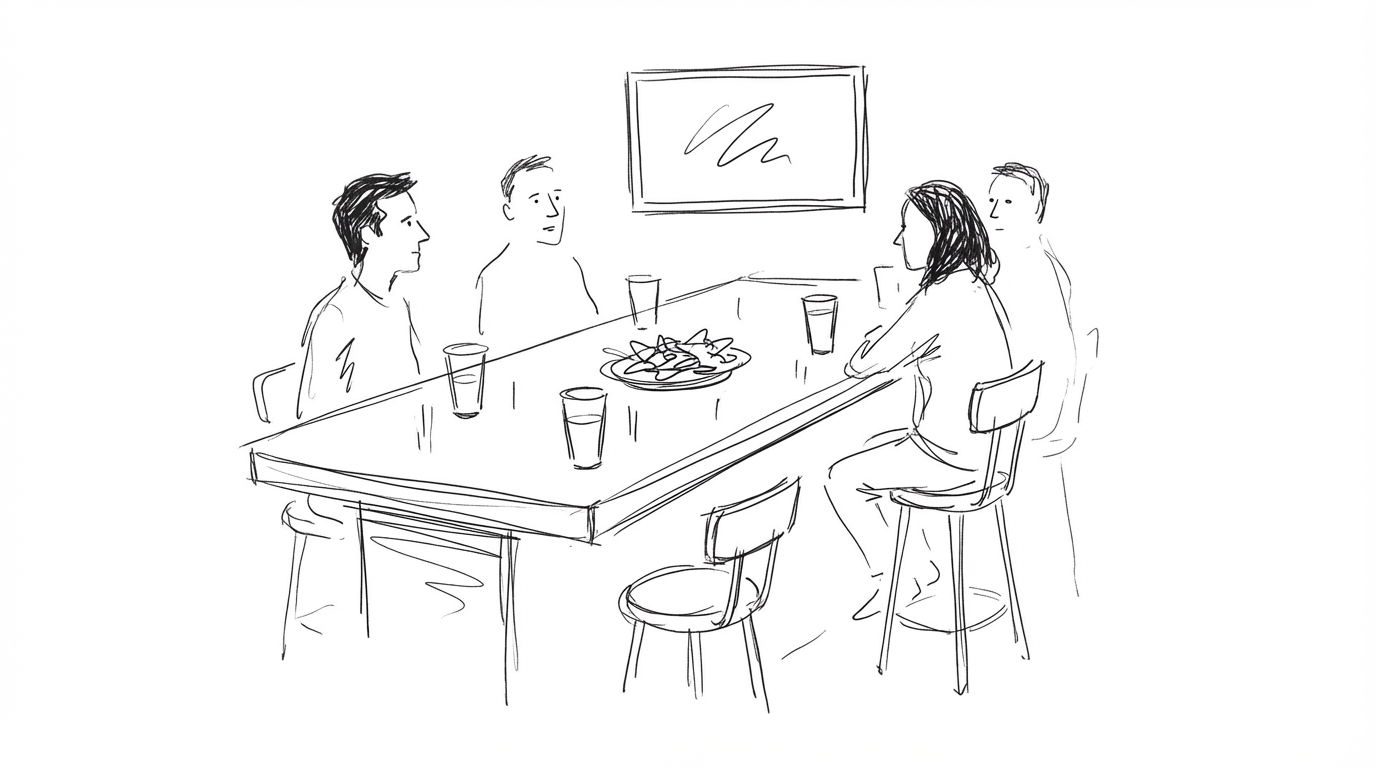
Large parties are the most profitable bookings a restaurant can take, yet most restaurants make them the hardest to book. A table of 8 spending $75 per person generates $600 in a single seating — the same revenue as four 2-tops that each need to be turned.
But try booking a large party at most restaurants. You'll encounter:
- A phone call to voicemail (because it's during service)
- A "please email us" redirect (adding 24-48 hours of delay)
- A back-and-forth negotiation over dates and menu options
- Manual floor plan checking by a manager
By the time the restaurant responds, the organizer has often booked elsewhere.
revenue per seating from large party bookings vs. standard tables
— Restaurant industry average
The Economics of Group Dining
Large party bookings are disproportionately valuable. Beyond the higher per-table revenue, they offer several operational advantages:
- Higher average spend per guest: Group diners order more courses, more wine, and more desserts
- Pre-fixe opportunity: Set menus reduce kitchen complexity and food waste
- Lower no-show rate: Group organizers are more committed — they've coordinated 8+ schedules
- Advance booking: Groups book 2-4 weeks ahead, giving better planning visibility
- Event add-ons: Decorations, AV equipment, cake cutting — each an upsell opportunity
average monthly revenue lost from mishandled large party inquiries (50-seat restaurant)
— Elyra customer data, 2026
Why Current Systems Fail
Standard reservation platforms treat a party of 8 the same as a party of 2. They check if a single table is available, ignore floor plan constraints, and can't handle the nuanced conversation that group bookings require.
A large party booking involves questions that automated systems struggle with:
- "Can we push tables together near the window?"
- "Three of us are vegetarian, one is gluten-free"
- "We'd like a set menu around $65 per person, wine included"
- "Can we arrive 30 minutes early to set up decorations?"
These aren't yes/no questions. They require understanding the restaurant's floor plan, menu flexibility, and service style.
The AI Approach
AI voice agents handle large party inquiries end-to-end. When a caller says "I'd like to book for 12 people," the AI doesn't just check table availability. It:
- Collects requirements: Party size, preferred date/time, occasion, dietary needs, budget
- Checks the floor plan: Identifies which table configurations can accommodate the group
- Proposes options: "I can offer the private dining room for 12 on Saturday at 7pm, or the long table by the window on Friday at 8pm"
- Handles menu planning: Suggests set menu options within the stated budget
- Confirms and follows up: Sends a confirmation email with all details, follows up 48 hours before
The entire interaction takes 3-5 minutes. No staff involvement required until the group walks in.
Capturing Lost Revenue
Restaurants that automate large party booking see 25-40% more group reservations. The increase comes from three sources:
- Faster response time: Instant answers instead of 24-48 hour email delays
- After-hours availability: 40% of large party inquiries come outside business hours
- Reduced friction: One phone call instead of a multi-day email thread
For a restaurant doing 10 large party bookings per month at an average of $500 per booking, a 30% increase means $1,500/month in additional revenue — $18,000/year from fixing one workflow.
Getting Started
The transition from manual to automated large party booking takes less than a week. The setup process:
- Map your floor plan configurations (which tables combine for 6, 8, 10, 12+)
- Define your set menu options and pricing tiers
- Set your large party policies (minimums, deposits, cancellation terms)
- Train the AI on your specific venue capabilities
Once configured, every large party inquiry gets an immediate, professional response — whether it comes in at 2pm or 2am, during the lunch rush or on a quiet Monday morning.